
The role of a victim advocate exists, in part, because of system failures. Advocates help survivors understand and exercise their rights, navigate systems to access the care that they need, and to eliminate barriers to healing. This includes disrupting harm caused by systems, holding system partners accountable, and advocating for better system responses. All survivors deserve choice and control over their own healing and justice, and for some that may include engaging with criminal legal and other systems. It is the role of an advocate to support survivor decision-making with regards to system engagement, to help them navigate systems, and to eliminate barriers survivors may face within systems.
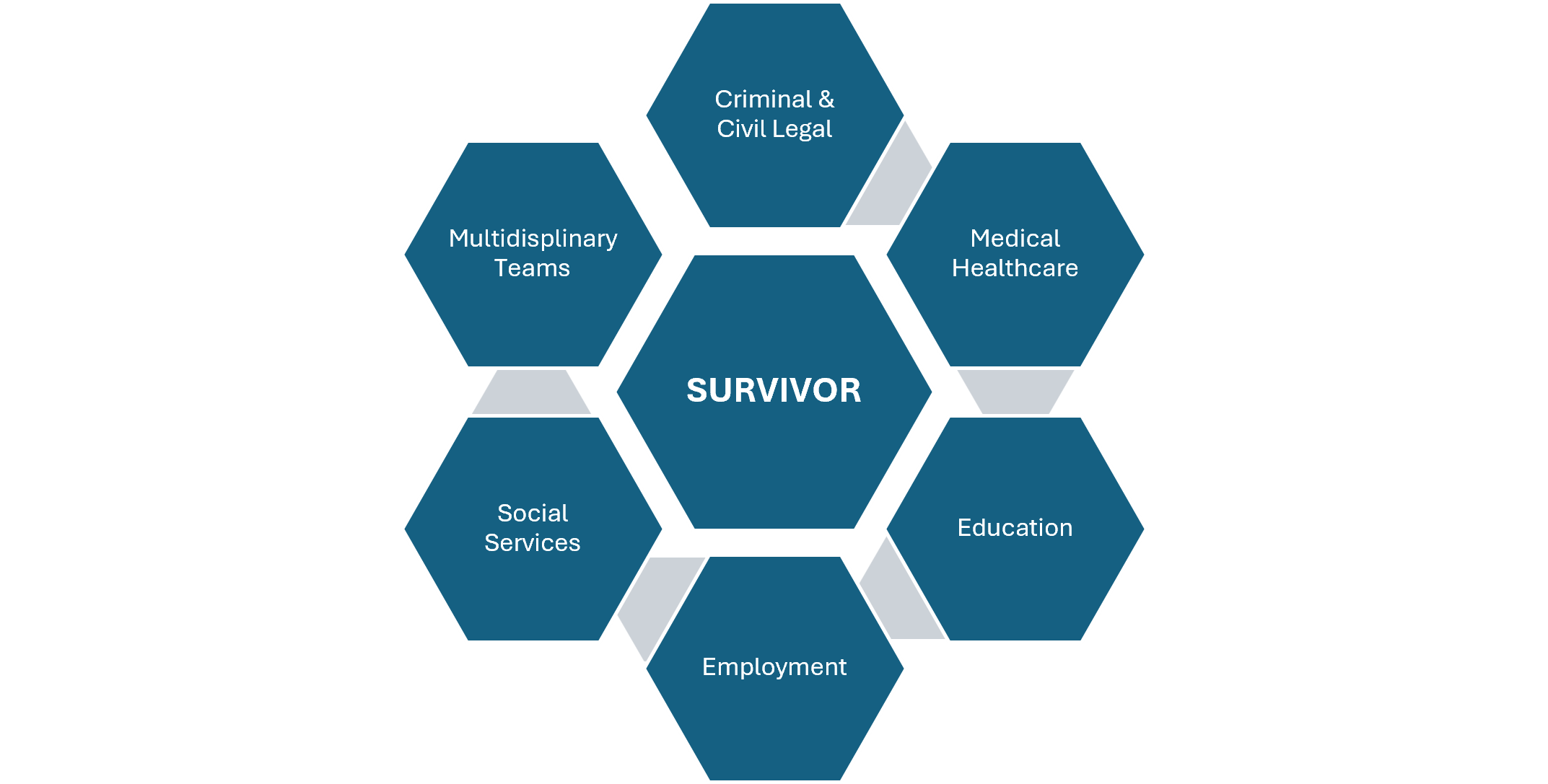
Not all survivors want to engage with systems, and system engagement is not always in their best interest. The majority of survivors do not report to law enforcement, and that is due to system responses influenced by rape culture, white supremacy, transphobia, and other systems of oppression. It is critical that advocates understand that system responses can cause harm, especially to historically marginalized communities. Community-based advocates must be prepared to support survivors regardless of the decisions they make about system engagement.
To effectively support survivors, advocates must understand the systems that they may encounter. Please see the Systems section of our website for more information about systems engagement and advocacy.