As with any disease, conflict, or endeavor, it is not enough to meet the challenges head-on–we must be a step ahead of the issue; we must be upstream, investigating the root causes of the issue. WCASA’s mission to end sexual violence is indicative of the importance prevention is in our work.
For information on training, technical assistance or resources related to prevention, contact Sarah Lawton, Prevention Coordinator, or Angie Rehling, Prevention Coordinator. We also invite you to join the conversation on the prevention listserv.
| Gender Socialization | Objectification & Sexualization | Normalization of Violence & Power | Limited Concepts of Health & Sexuality |
|---|---|---|---|
| Norms that support male superiority | Norms that support male sexual entitlement | Gender tolerance of sexual violence | Systems that limit access to reproductive health services &choice |
| Norms that maintain female inferiority | Norms that maintain female sexual submissiveness | Lack of positive models for conflict resolution & discipline | Sexual entitlement & cultural misperceptions about consent |
| Homophobic of gender-based harassment & discrimination | Exploitation through pornography, prostitution & trafficking | Acceptance of violence over systemically - oppressed groups | Limited age-appropriate scientific-based education on sexuality |
| Rigid gender roles and expectations | Culture of hyper-sexualization | Culture that glorifies violence | Lack of support for autonomy & power to make decisions about one's body |
Additionally, we have developed resources for each norm that includes information, research, resources and activities to support programs who want to discuss these norms in their schools, groups or communities.
Download the one page Social Norms Toolkit Summary.
Also see the Center's for Disease Control (CDC)'s social norm page.
10 Core Concepts to Prevent Child Sexual Abuse
A collaboration between the Wisconsin Coalition Against Sexual Assault and state-level agencies led to the development of the original10 Core Concepts to Prevent Child Sexual Abuse (CSA). These partners, brought together through the A2A Steering Committee (see below), identified these concepts through a review of best practices for CSA prevention, as well as research on to prevent victimization and perpetration across childhood and adolescence.
In 2024, WCASA revisited the 10 Core Concepts and updated them with new evidence and expanded content. This revision not only ensures the Concepts' continued accuracy, but also reflects important considerations for an evolving socio-political landscape. The updated Concepts can be downloaded here: WCASA 10 Core Concepts to Prevent Child Sexual Abuse.
For more information about these resources, please contact Sarah Lawton, Prevention Coordinator, or Megan Murray, Evaluation Coordinator.
- Download updated 2024 10 Core Concepts to Prevent Child Sexual Abuse PDF
- Download WCASA and A2A 2025 Child Sexual Abuse Prevention Curriculum Review PDF
- Watch the training with WCASA and A2A: In the Classroom and Community - Child Sexual Abuse Prevention Resources
- Original 10 Core Concepts Presentation from National Sexual Assault Conference (NSAC) - This workshop was part of the Prevention Track at the 2015 National Sexual Assault Conference that held September 2 – 4 in Los Angeles, CA. In this session Kelly Moe Litke and Rose Hennessy review the concepts, research, and recommendations for implementation.
Consent Is… Toolkit
 This toolkit was created through a collaborative effort with Wisconsin youth, sexual assault and domestic violence preventionists, and adolescent health experts. It contains resources for educating and talking about consent with children through young adult audiences, as well as materials for hosting a “Consent is…” campaign in your community.
Navigating Digital Safety: A Resource
Developed by the WCASA prevention team in 2025, this resource focuses on primary, secondary, and tertiary prevention of sexual abuse in digital spaces. Please see our technology page for this resource.
Rape Prevention & Education (RPE) Program
Established in 1994 as a part of the Violence Against Women Act (VAWA), the RPE Program is implemented by the Centers for Disease Control and Prevention (CDC) and operates in all 50 states, the District of Columbia, Puerto Rico and four U.S. Territories. For more information see Center for Disease Control (CDC) RPE background information and the Rape Prevention Education Program Factsheet (NSVRC)
In Wisconsin, RPE funds are administered by the Department of Health Services (DHS), through the Injury/Violence Prevention Program. For more information see the sexual violence prevention page at the Wisconsin DHS.
Online Training
You can access a variety of prevention trainings that have been offered by WCASA via YouTube or access the webinar archive for these and other archived webinar topics:
- Zooming In: Poetry as an Entry Point into Violence Prevention Work (WCASA, 2018)
- The Sexual Assault to Prison Pipeline: Realities & Recommendations (WCASA, 2018)
- Teaching Good Sex: A Method for Violence Prevention (WCASA, 2017)
- Pornography: Normalizing the Relationship Between Violence and Sex (WCASA, 2017)
- Integrating an Anti-Oppression Approach in SV Prevention (WCASA, 2017)
- Gender Socialization & Sexual Violence (WCASA, 2017)
- Introduction to Prevention (WCASA, 2016)
- Involving Teens in Prevention Work: Educating, Engaging & Empowering Youth Leaders (WCASA, 2016)
- Moving Pictures: Using Narrative Film and Television in Sexual Violence Prevention (WCASA, 2016)
- Working Around The Gate Keepers: Unorthodox Approaches to Community Engagement (WCASA, 2016)
- Adapting curriculum to be LGBTQ+ inclusive (WCASA, 2016)
- Using Social Media Effectively (WCASA, 2016)
- Normalization of Violence (WCASA, 2015)
- Prevention (WCASA, 2015)
- Strategies for Ending Rape Culture and Sexual Violence (WCASA, 2015)
- Introduction to Evaluation (WCASA, 2013)
- Intersectionality with Oppression (WCASA, 2013)
- Adverse Childhood Experiences (ACE) (WCASA, 2013)
- Integrating Prevention & Classroom Tips for Different Age Groups (WCASA, 2013)
- Community and Societal Level Interventions in Prevention (WCASA, 2013)
Collaborative Prevention Projects
A complex social problem, sexual violence requires a collaborative approach to prevention. WCASA collaborates with partners from state and local levels on initiatives related to sexual violence prevention.
Adverse Childhood Experiences (ACE):
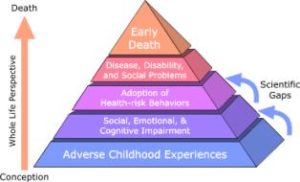
The Adverse Childhood Experiences (ACE) Study is one of the largest investigations ever conducted to assess associations between childhood maltreatment – including sexual abuse – and long-term health outcomes. The original study was conducted in the mid-90s in California; WCASA has been collaborating at the state level with a variety of partners to better understand the impact of ACEs in Wisconsin. See more info about ACEs in Wisconsin:
Awareness to Action (A2A) Steering Committee:
A2A is an initiative focused on prevention child sexual abuse by helping adults and communities take action. As a member of the A2A Steering Committee, WCASA works with Children’s Hospital (and others) on education and policy. This initiative is a program of Children’s Hospital of Wisconsin. See more information.
Social Norms & Risk Factors
Social norms are the attitudes, values, and beliefs that exist in our culture that contribute to sexual violence. Beginning in 2014, WCASA staff reviewed research and contacted experts to identify risk factors that are relevant and timely for sexual assault prevention in Wisconsin. This led to the identification of social norms and risk factors. Recognizing that systems of oppression reinforce these norms, we aim to address the ways privilege, power, and entitlement contribute to all of the norms.